Most people give their jaw very little thought until it starts to ache or click. The temporomandibular joint moves every time you speak or swallow, and when the muscles that control it fall out of balance, a simple meal or a long phone call can leave the face sore and tired. For years, relief usually meant a night guard worn to bed and a set of jaw exercises done at home.
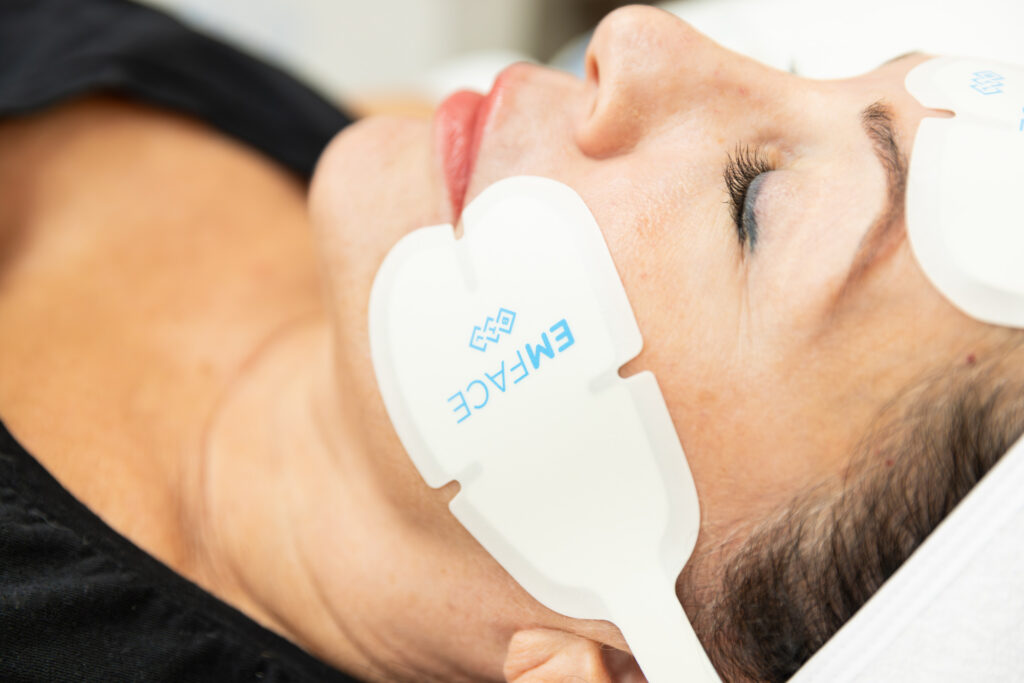
EmFace, the needle-free device many Ocala patients already know for facial toning, now holds FDA clearance for temporomandibular joint (TMJ) dysfunction. It works on the muscles behind much of the pain, using gentle heat and electrical stimulation to relax tissue held in spasm and retrain it to move normally. This guide explains how that process works and what a course of treatment looks like at Mid-Florida Age Management.
| EMFACE FOR TMJ AT A GLANCE
Session length: About 20 minutes Typical course: Four sessions, usually spaced about a week apart Needles or medication: None Downtime: None, and most patients go straight back to their day FDA status: Cleared for TMJ dysfunction and its associated pain |
What Is TMJ Dysfunction?
Temporomandibular joint dysfunction is a disorder of the jaw joint and the chewing muscles that move it, marked by pain or by a mouth that will not open smoothly and fully. Clinicians group these problems under the broader term temporomandibular disorders, or TMD. In everyday conversation most people simply say they have “TMJ,” which is technically the name of the joint itself.
The temporomandibular joint sits just in front of each ear, where the lower jaw, or mandible, meets the temporal bone of the skull. It is one of the few joints in the body that both hinges and glides. A small fibrous disc rests between the bone surfaces and cushions the movement as the jaw drops open and slides forward.
Four pairs of muscles power the joint. The masseter and temporalis close the mouth with considerable force, while the medial and lateral pterygoid muscles guide the jaw forward and from side to side during chewing. Because these muscles work as coordinated pairs, tension on one side can pull the whole system off track.
TMD is broadly divided into two groups. Muscle-based TMD stems from tight, overworked chewing muscles. Joint-based TMD involves the disc or the bone surfaces inside the joint itself. Many patients have a mix of both, which is why a careful evaluation comes before any treatment plan.
How Common Is TMJ Dysfunction?
Jaw disorders affect far more people than most expect. A systematic review and meta-analysis published in Clinical Oral Investigations estimated the prevalence of temporomandibular joint disorders at roughly 31% among adults and older adults. Women seek care for TMD more often than men, and symptoms frequently surface in early to middle adulthood.
Recognizing the pattern early makes treatment simpler. Common signs include:
- Aching in the jaw muscles or temples, often worse in the morning or after a chewy meal
- Clicking or popping when the mouth opens
- A jaw that feels tight or catches before it opens fully
- Headaches that begin near the temples and spread along the side of the face
- Ear fullness or ear pain with no sign of infection
What Causes the Jaw Muscles to Lose Their Balance?
Overuse is the most familiar cause. People who clench during the day or grind their teeth at night, a habit known as bruxism, keep the masseter and temporalis contracted for hours at a stretch. Muscles held in that state shorten and develop tender trigger points. Circulation through the tight tissue also drops, which keeps it sore long after the clenching stops.
Stress and posture add to the load. Emotional strain often shows up as clenching, and a forward head position, common after long hours at a desk or on a phone, changes how the lower jaw rests. Dental work and old injuries can also alter the way the teeth meet and shift the burden onto the muscles.
Over time a self-reinforcing cycle can take hold. Pain makes the muscles guard against movement, and guarding produces more tension and stiffness. Breaking that cycle is the central goal of muscle-focused TMJ care.
How Does EmFace Treat TMJ Dysfunction?
EmFace is a non-invasive platform from BTL that combines two energies in one applicator: synchronized radiofrequency (RF) and high-intensity focused electrical stimulation, known as HIFES. The device first reached the market as an aesthetic treatment for lifting the face and softening wrinkles. In 2025 the U.S. Food and Drug Administration cleared it for a functional use as well, the treatment of TMJ dysfunction.
What Does the Radiofrequency Do?
Synchronized RF delivers controlled heat into the tissue beneath the applicator. In the jaw, that warmth increases local blood flow and helps relax muscle fibers locked in spasm. Heat has long been a mainstay of conservative TMJ care because warm muscle stretches more easily and tends to hurt less.
What Does HIFES Stimulation Do?
HIFES sends electrical impulses that produce strong, rhythmic contractions in the targeted muscles. Those repeated cycles of contraction and release give the jaw muscles a structured workout that would be hard to reproduce voluntarily. Clinicians call the effect muscle re-education, a process that retrains tissue stuck in a guarded pattern to contract and relax on cue.
Why Does Treating the Muscle Restore Joint Function?
The joint can only move as freely as its muscles allow. When the masseter and temporalis stay tight, they compress the joint and limit how smoothly the jaw glides forward as the mouth opens. As those muscles relax and regain normal tone, the jaw often opens wider with less effort. That relationship explains why improved mandibular range of motion appears among the device’s cleared uses.
The applicators adhere to the skin, so the session runs hands-free once the provider has dialed in the settings. Both energies work at the same time, and neither one breaks the skin.
| WHAT THE FDA CLEARANCE COVERS
EmFace is cleared for relief of symptoms associated with muscle spasm, treatment of TMJ dysfunction and its associated pain, muscle re-education, increased local blood flow, and the maintenance or improvement of mandibular range of motion. The treatment involves no needles or medication, which makes it a practical option for patients who want to avoid both. |
How Does EmFace Compare With Other TMJ Treatments?
TMJ care generally follows a stepwise approach that starts with conservative options and moves toward procedures only when needed. EmFace belongs in the conservative tier, alongside oral appliances and physical therapy.
| Treatment | How It Works | Needles or Surgery? | Downtime | Often Suited For |
|---|---|---|---|---|
| EmFace TMJ | Synchronized RF warms the tissue while HIFES contracts and re-educates the jaw muscles | Neither | None | Muscle-driven jaw pain and restricted opening |
| Night guard (occlusal splint) | A custom appliance cushions the teeth and absorbs grinding forces during sleep | Neither | None; worn nightly | Nighttime grinding and tooth wear |
| Physical therapy | Manual therapy, stretching and posture work with a therapist | Neither | None; needs regular visits and home exercise | Patients who can commit to a longer program |
| Neuromodulator injections (off-label) | Temporarily weakens the masseter to reduce clenching force | Injections | Minimal | Heavy clenchers with a strong, enlarged masseter |
| Joint procedures (arthrocentesis or surgery) | Flushes or repairs structures inside the joint | Needles or surgery | Days to weeks | Structural joint damage that has not responded to conservative care |
These approaches often work best together. A night guard protects the teeth from grinding forces during sleep, while EmFace addresses the muscles doing the grinding. Some patients also ask about neuromodulators, the same family of products we use for wrinkle relaxers in Ocala. Injected into the masseter, they reduce clenching strength by temporarily weakening the muscle. EmFace takes the opposite route and retrains the muscle to work normally, with no injections involved.
What Happens During an EmFace TMJ Session?
The Consultation
Treatment starts with a conversation. Your provider reviews when the symptoms began and what makes them worse, then checks how far your mouth opens and whether the jaw clicks or drifts to one side. If the history points toward disc damage or arthritis inside the joint, we may recommend imaging or a visit with your dentist or an oral surgeon first. EmFace works on muscle, so a clear picture of the joint helps set realistic expectations.
The Treatment
You recline comfortably while the provider places the applicators over the jaw muscles. Settings are adjusted to your tolerance, and the session runs for about 20 minutes. Most patients describe a deep warmth paired with a rhythmic tightening as the muscles contract and release. No numbing cream is needed, and many people simply rest with their eyes closed.
Afterward
Most people return to work or errands right after the appointment. Some notice mild tiredness in the jaw muscles, similar to the feeling after an unfamiliar workout, and it usually fades within a day.
| BEFORE YOUR FIRST SESSION
Arrive with clean skin on the treatment area, free of lotion and heavy makeup, and drink plenty of water beforehand. Tell your provider about any implanted electronic device or metal in the face or jaw. Pregnancy and breastfeeding also need to be disclosed, since both rule out treatment for now. |
How Many Sessions Will You Need?
A standard EmFace course consists of four sessions, typically spaced about one week apart. Some patients notice easier chewing or less morning tightness after the first two visits, while others feel the change build gradually across the series. Improvement can continue for several weeks after the final session as the muscles settle into healthier patterns.
Clenching habits and daily stress rarely disappear entirely, so symptoms can return over time. Your provider will suggest maintenance sessions based on how your jaw responds. Simple habits help protect the result, such as keeping the teeth slightly apart when the jaw is at rest and wearing a night guard if you grind.
Who Is a Good Candidate for EmFace TMJ Treatment?
EmFace tends to suit adults whose jaw symptoms are driven largely by muscle tension. You may be a strong candidate if you have:
- Jaw pain or tightness linked to clenching or grinding
- A mouth that opens less than it used to, or a jaw that tires quickly while chewing
- Symptoms that have not fully settled with a night guard or home exercises
- A preference for a drug-free option that involves no needles
EmFace may not be the right first step for someone with significant structural damage inside the joint or a recent jaw injury. In those situations a dentist or oral surgeon should evaluate the joint first. Once the structural issue is under control, EmFace can still play a supporting role for the surrounding muscles.
Can EmFace Improve Jaw Function and Facial Appearance Together?
EmFace earned its reputation as a needle-free lift for the cheeks and brows long before it treated a jaw. On its aesthetic settings, the same technology tones the facial muscles and stimulates collagen and elastin in the overlying skin. Patients interested in both goals can ask their provider how EmFace in Ocala might be planned to address facial tone alongside jaw comfort.
For a broader look at the aesthetic side, our article on non-surgical facelift options explains how muscle toning and skin tightening complement each other. Patients focused on texture and fine lines may also find our comparison of Exion and Morpheus8 useful.
Why Choose Mid-Florida Age Management for EmFace in Ocala?
Mid-Florida Age Management is a physician-led practice, and Dr. Gene Turner, MD, FAARFM, is on-site every day. Dr. Turner is board-certified and fellowship-trained in anti-aging medicine and has cared for patients across Central Florida for decades. His team of registered nurses and aesthetic providers works with the full BTL device line, so EmFace is delivered by staff who use the platform routinely.
Our approach also looks past the symptom. Jaw tension rarely appears in isolation, and Dr. Turner’s root-cause philosophy means questions about sleep and stress belong in the conversation. You can meet Dr. Turner and our care team before your first appointment.
Frequently Asked Questions
Does EmFace TMJ Treatment Hurt?
Most patients find it comfortable. The radiofrequency feels like deep warmth and the contractions feel strong but tolerable, and the provider can adjust intensity at any point during the session.
Can I Keep Wearing My Night Guard During Treatment?
Yes. EmFace works alongside a night guard, and many patients use both. The guard protects the teeth at night while the sessions address muscle tension.
How Soon Can I Return to Normal Activities?
Right away. There is no recovery period, so you can eat and work as usual after each visit.
Will My TMJ Symptoms Come Back?
Results vary with clenching habits and stress levels. Maintenance sessions and protective habits help many patients hold on to their improvement, and your provider will build a plan around how your jaw responds.
Ready to Chew and Speak Comfortably Again?
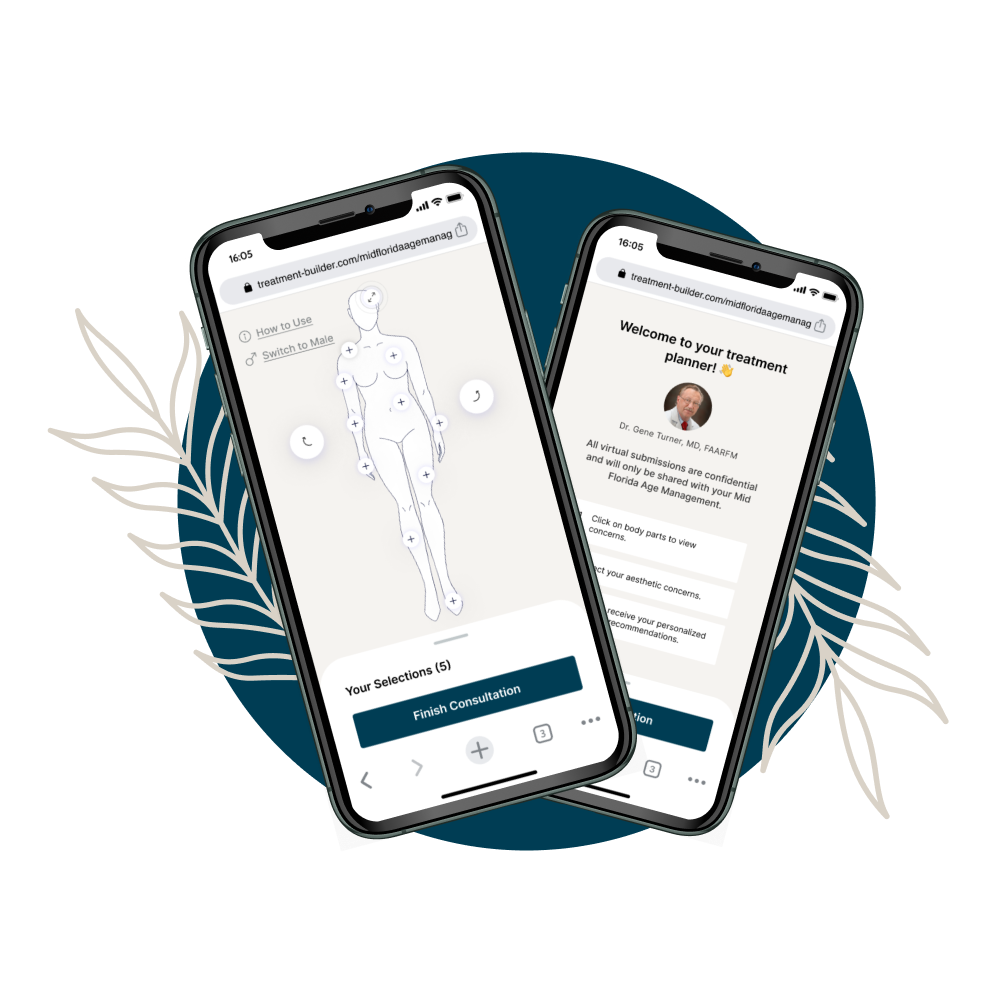
Jaw pain has a way of shrinking daily life, from the foods you choose to how long you can comfortably talk. EmFace offers a needle-free way to relax and retrain the muscles behind it, and your initial consultation is free. Call 352-629-3311 or request an appointment online to schedule your EmFace TMJ consultation. You will find us at 1630 SE 18th Street, Suite 202, Ocala, FL 34471.
References
- Valesan LF, Da-Cas CD, Réus JC, et al. Prevalence of temporomandibular joint disorders: a systematic review and meta-analysis. Clinical Oral Investigations. 2021;25(2):441-453. https://link.springer.com/10.1007/s00784-020-03710-w
- National Academies of Sciences, Engineering, and Medicine. Temporomandibular Disorders: Priorities for Research and Care. Washington, DC: The National Academies Press; 2020. https://nap.nationalacademies.org/read/25652/chapter/5
- The Dermatology Digest. U.S. FDA Clears BTL’s Emface for Treating TMJ. 2025. https://thedermdigest.com/u-s-fda-clears-btls-emface-for-treating-tmj/